Pietrasanta means “holy stone.”
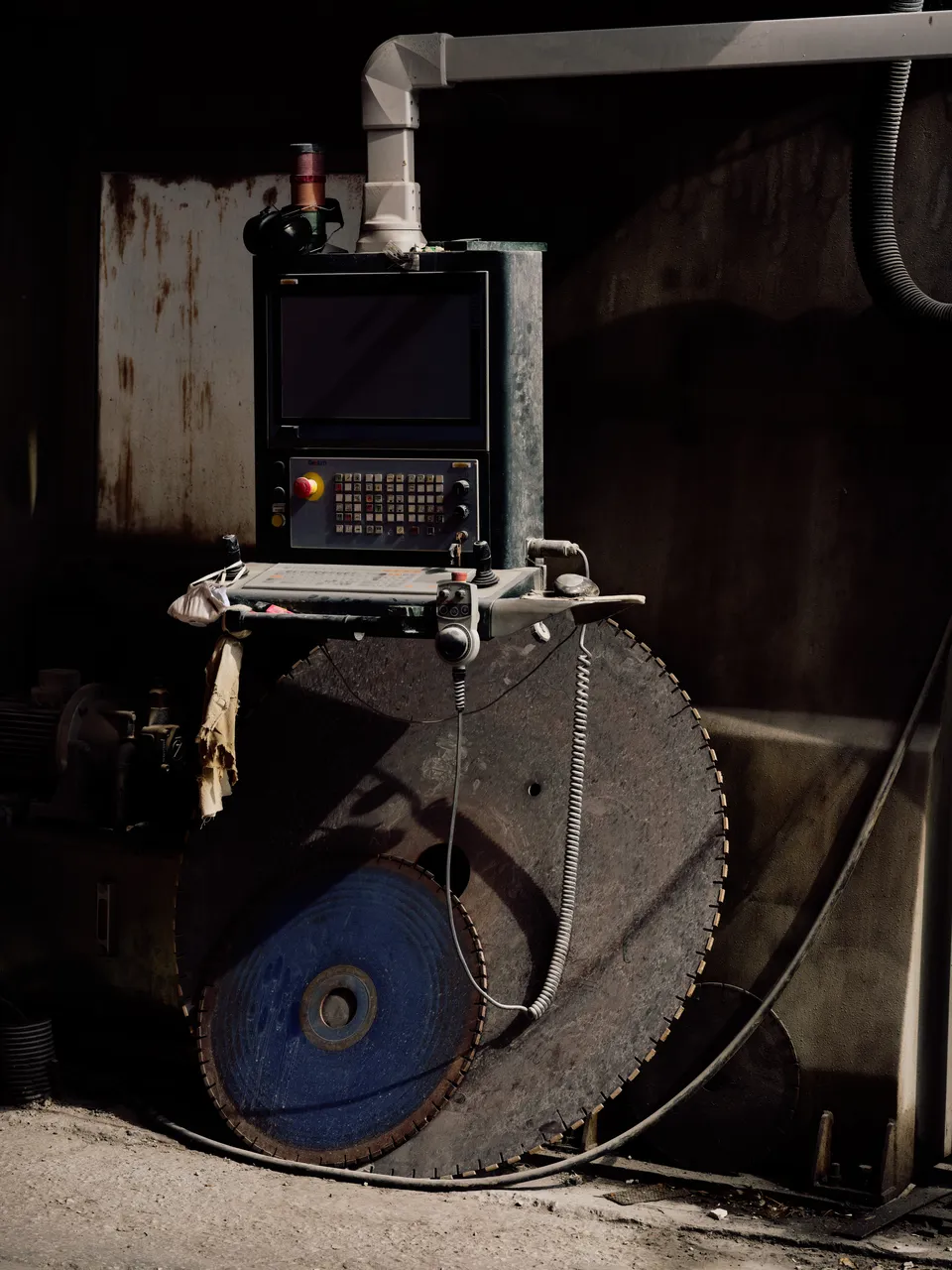
Imagine a small Tuscan town at the foothills of the Apuan Alps. As you walk through it, you can hear chisels banging against white rock. Each stroke shapes stone. The air is filled with marble dust, and in the courtyards you hear not only Italian, but German, Chinese, and Swedish. Sculptors from every continent come here to share stories over wine – you can tell by their hands and the way they hold the glass that they’ve worked with stone for a long time.
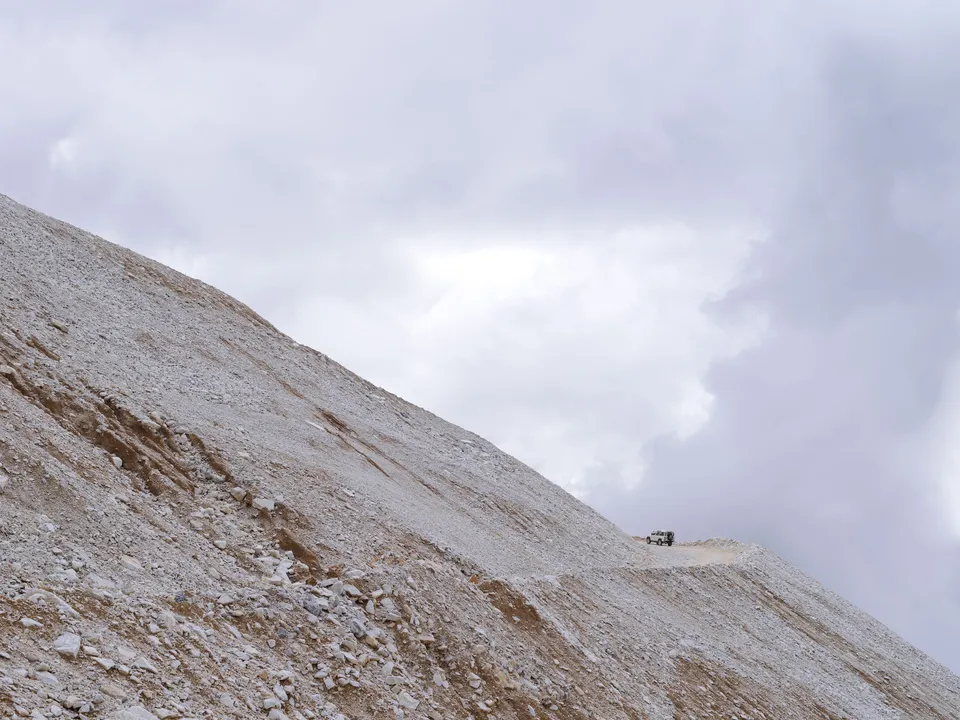
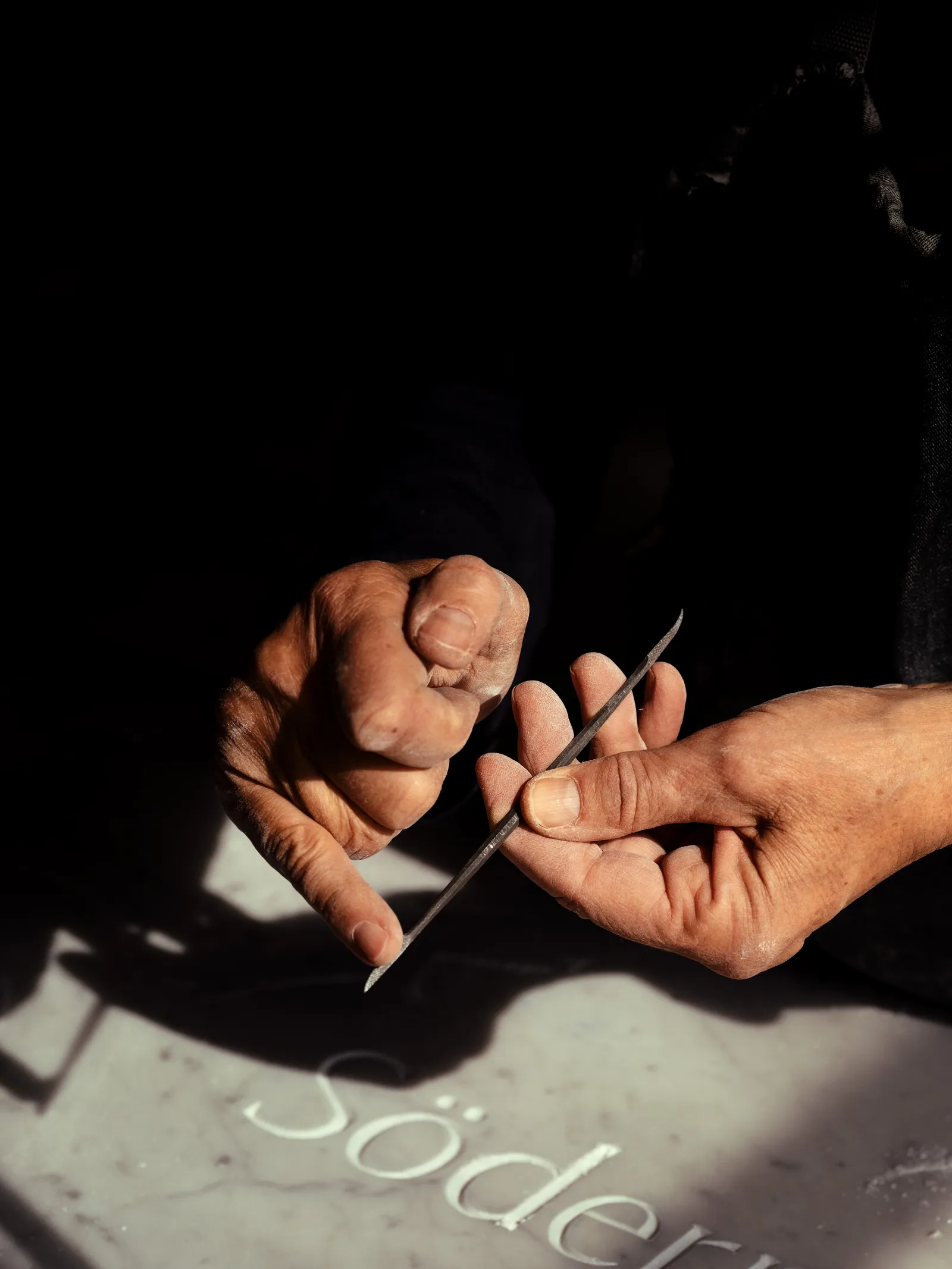
Marble has moods, they say. It has grain. A vein you didn’t notice yesterday can undo a month’s work this afternoon. Carvers read the stone the way old sailors read weather. It takes more than intelligence and experience; it takes intuition. Fingerspitzengefühl, as the Germans say. Soft hands forming solid stone.
Michelangelo first quarried marble here some five hundred years ago. Since then, just about everything in the world has changed. But the tools for carving marble barely have. Subbia, gradina, scalpello — the point, the tooth, the flat, remain crucial to the process. Today, much of our world is obsessed with innovation – the idea of new. But in Pietrasanta, mastering a craft and understanding a material are at the center of culture. Purpose comes from within, not trying to impress others with novel expressions.
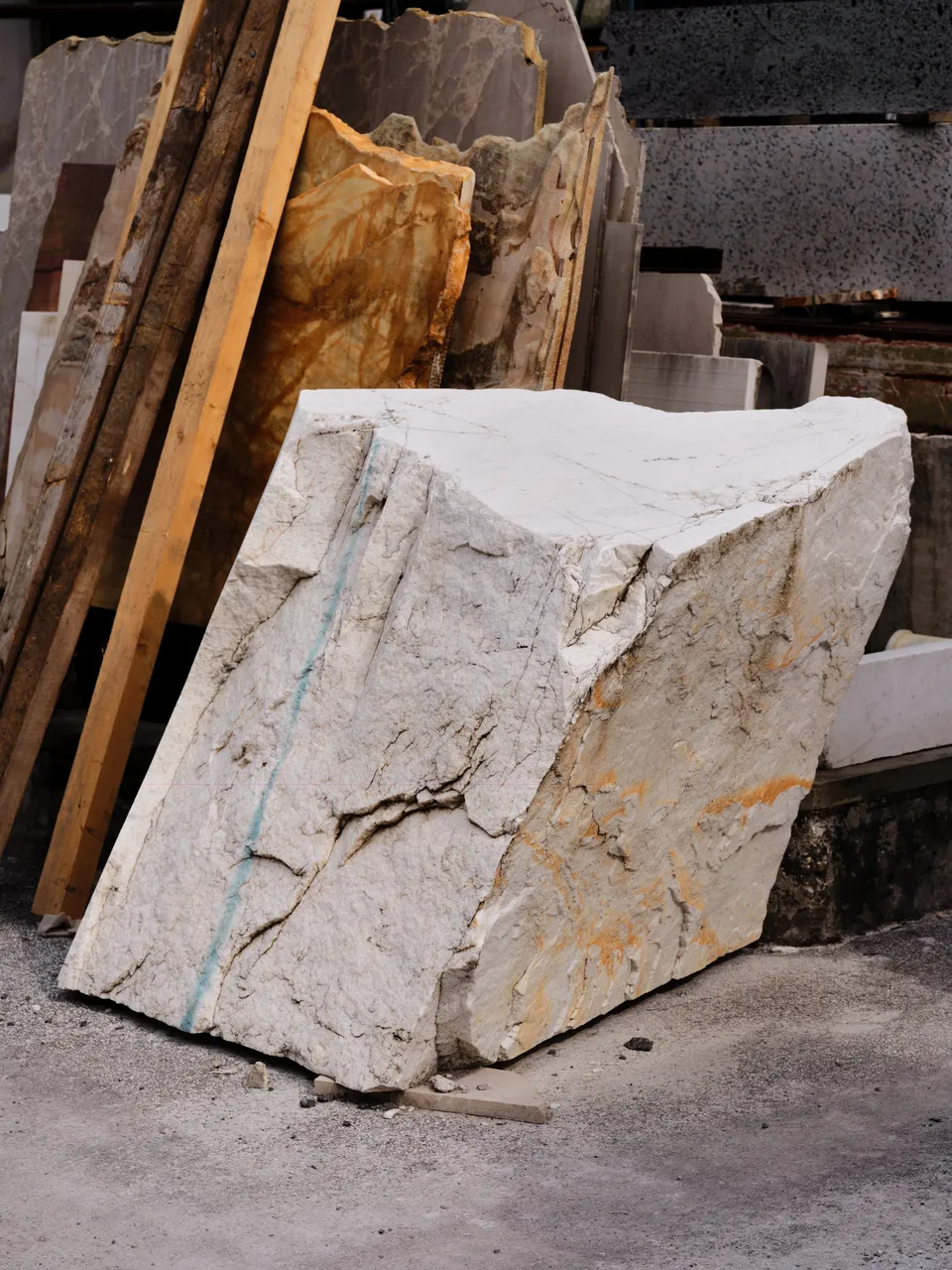
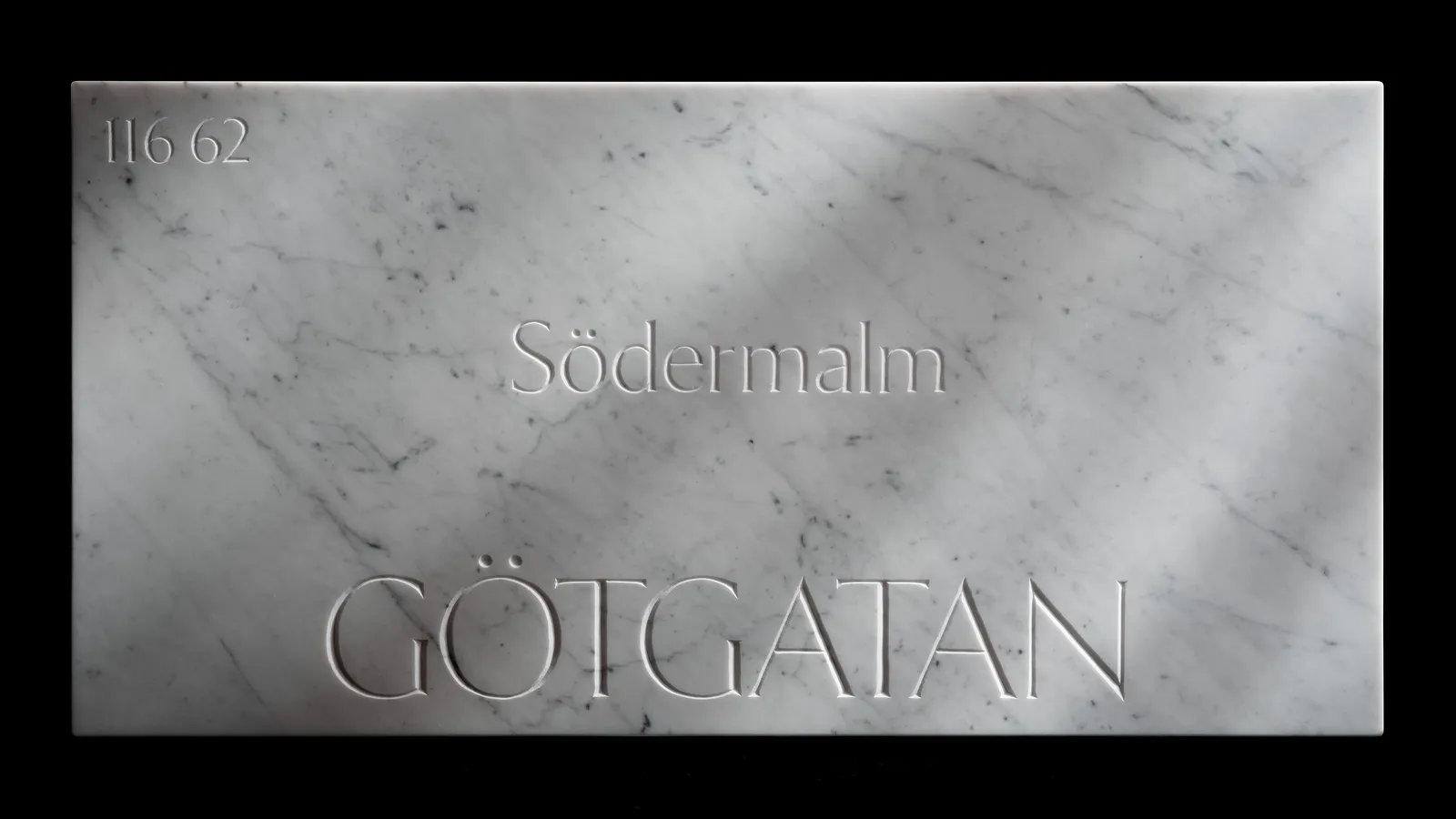
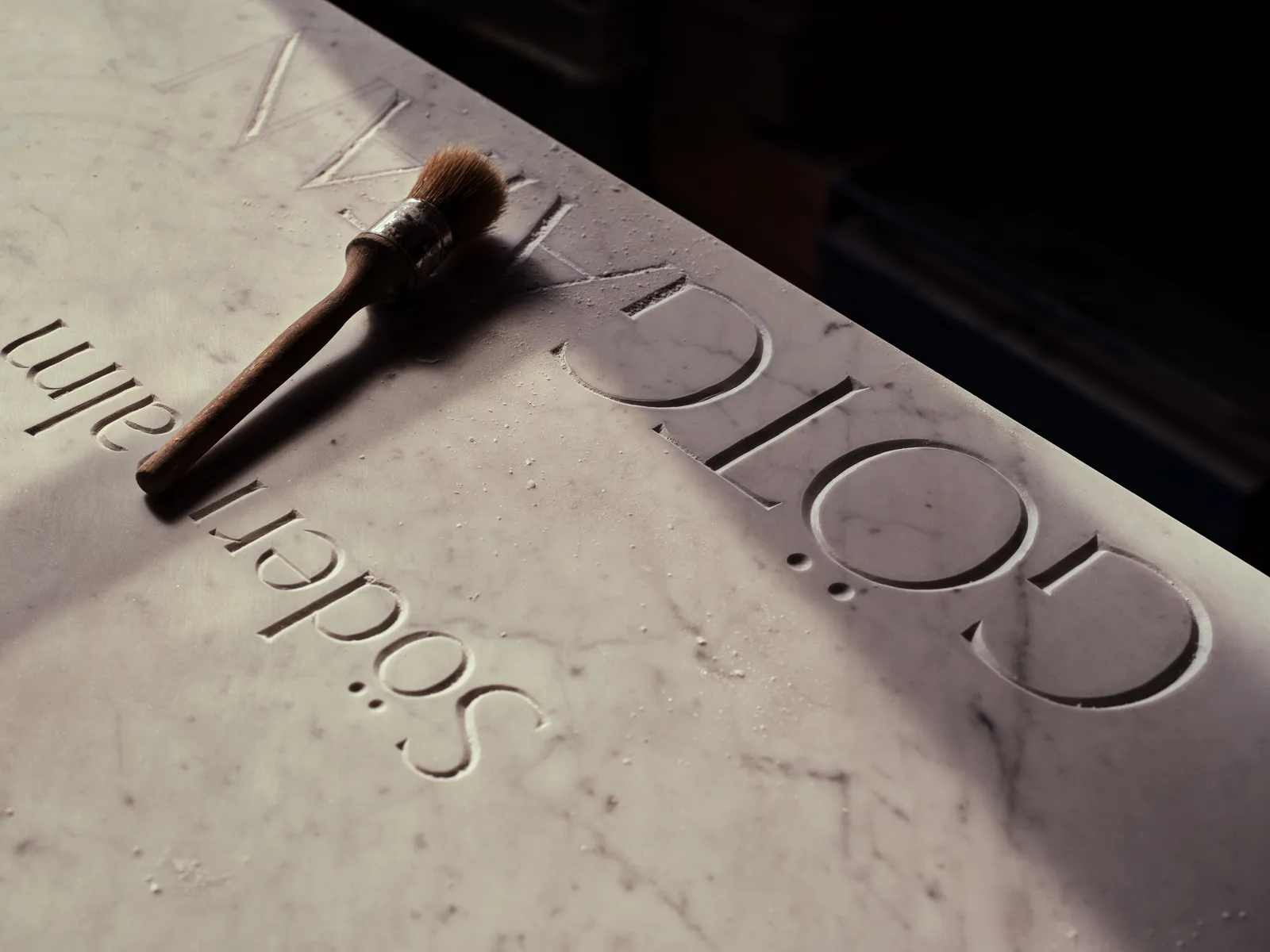
Letter-cutting is its own discipline inside the craft. The chisel is held at an angle; the letter is carved in a V-shape. A serif takes as much care as a curve. Mistakes cannot be fixed, only lived with. The Romans worked most of this out two thousand years ago, on Trajan’s column for an emperor who wanted to be remembered; the emperor is gone, the letters are still there. They are the reason most of what you’ve read today looks the way it does. ABC, and so on.
Exemplar was cut in Pietrasanta, by hands that have spent a lifetime doing this, into stone that will outlast all of us. It seems a fitting way to end a conversation that has gone on for thirty years. Arrivederci.